

What is an ABS Sensor? Symptoms of Failure and Replacement Cost 2026
20 May 2026 — APD Expert Team
What is an ABS Sensor? Symptoms of Failure and Replacement Cost 2026
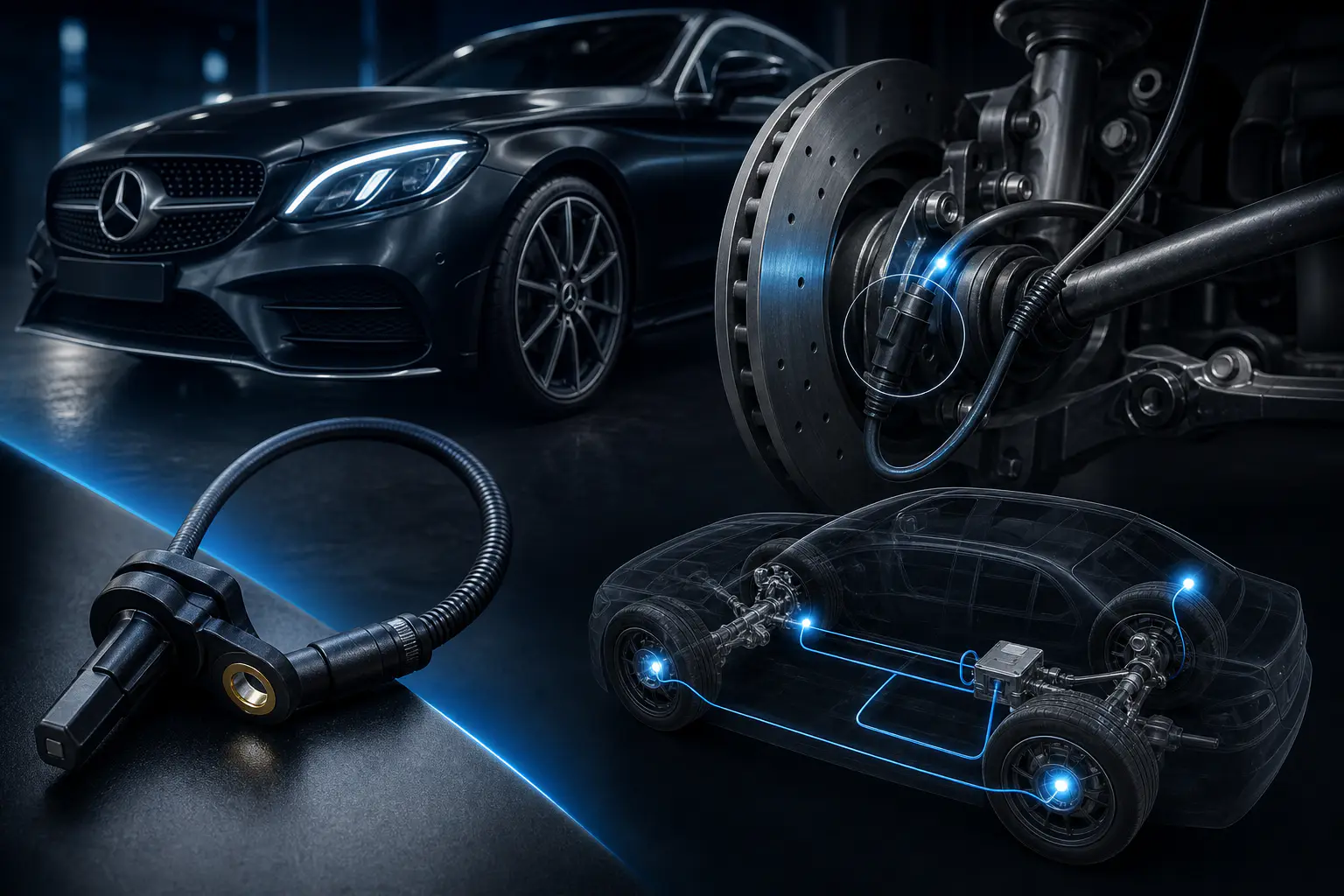
The ABS sensor is an important component that enhances the safety of modern vehicles. Especially in German car brands like BMW and Mercedes, this sensor plays a critical role in the proper functioning of the ABS system. In this article, we will examine what an ABS sensor is, the symptoms of failure, and the replacement cost in detail. We will also discuss how ABS sensors work in models such as E46, F30, W204, and W213, and in which situations replacement is necessary.
What is an ABS Sensor?
The ABS (Anti-lock Braking System) sensor is a device that monitors the wheel speeds of the vehicle and prevents the wheels from locking during braking. This sensor provides optimal control during braking by transmitting wheel speed information to the ABS control unit. This system is vital, especially on slippery surfaces.
How Does the ABS Sensor Work?
The ABS sensor typically uses a magnetic field to measure the speed of the wheels. As the wheels rotate, the sensor detects this movement and generates a signal. This signal is sent to the ABS control unit, and if there is a risk of the wheels locking, the system adjusts the brake pressure to allow the wheels to continue turning.
Symptoms of ABS Sensor Failure
When a failure occurs in the ABS sensor, it manifests itself with certain symptoms. These symptoms can affect driving safety and require timely intervention.
- ABS Warning Light: If the ABS warning light on the vehicle is illuminated, it usually indicates a sensor failure.
- Braking Issues: Conditions such as the brake pedal becoming stiff or soft can be signs of a sensor failure.
- Skidding or Instability: If the vehicle experiences skidding or instability on slippery surfaces, the ABS sensor may not be functioning properly.
- Change in Stopping Distance: An increase in stopping distance indicates that the ABS system is not functioning effectively.
Which Models Should Be Noted?
ABS sensors are common failure points, especially in popular models like BMW E46, F30, and Mercedes W204 and W213. The proper functioning of the sensors in these models is critical for driving safety.
ABS Sensor Replacement Cost
The replacement cost of an ABS sensor varies depending on the brand and model. In premium brands like BMW and Mercedes, replacement costs can generally be higher. The replacement process is usually performed by a technician, which is another factor affecting the cost.
| Model | Replacement Cost |
|---|---|
| BMW E46 | Approximately 150-300 TL |
| BMW F30 | Approximately 200-350 TL |
| Mercedes W204 | Approximately 180-320 TL |
| Mercedes W213 | Approximately 250-400 TL |
Replacement Process
The replacement of the ABS sensor is generally carried out with the following steps:
- The vehicle's wheels are removed.
- The old sensor is removed.
- The new sensor is installed.
- The brake system is checked, and a test drive is conducted.
Methods to Protect the ABS Sensor
It is important to implement some protective methods to extend the life of the ABS sensor and prevent failures:
- Periodic Maintenance: Regular vehicle maintenance helps maintain the health of the sensors.
- Use of Quality Spare Parts: Obtaining spare parts from reliable brands like Bosch, MANN, and MAHLE ensures long-lasting sensors.
- Checking the Brake System: Ensuring that the brake system operates correctly enhances the functionality of the ABS sensor.
The Importance of Brake Fluid
Brake fluid is a critical component for the proper functioning of the ABS system. Using quality and suitable brake fluid can extend the life of the sensor and improve the system's effectiveness.
Conclusion
The ABS sensor is vital for vehicle safety. Knowing the signs of its failures and intervening in a timely manner increases driving safety. Using proper maintenance and quality spare parts in models like BMW E46, F30, and Mercedes W204 and W213 extends the life of the sensors. If you experience any issues with your ABS sensor, you can reach out to our expert team for support. For more information, you can contact us via WhatsApp: Click here.
FAQ
1. What happens if the ABS sensor fails?
If the ABS sensor fails, the risk of the wheels locking during braking increases, jeopardizing driving safety.
2. How often should the ABS sensor be replaced?
The lifespan of the ABS sensor varies depending on usage conditions. It is generally recommended to check it every 100,000 km.
3. How long does it take to replace the ABS sensor?
The replacement of the ABS sensor can usually be completed within 1-2 hours.
4. How can I tell if the ABS sensor is faulty?
The illumination of the ABS warning light, changes in the brake pedal, and symptoms like skidding can indicate a sensor failure.
5. What is the importance of using quality spare parts?
Using quality spare parts enhances the vehicle's performance and prevents failures.