
How to Replace the Oil Cooler on BMW F30 N13?
April 30, 2026 — Alman Parça Deposu Editör
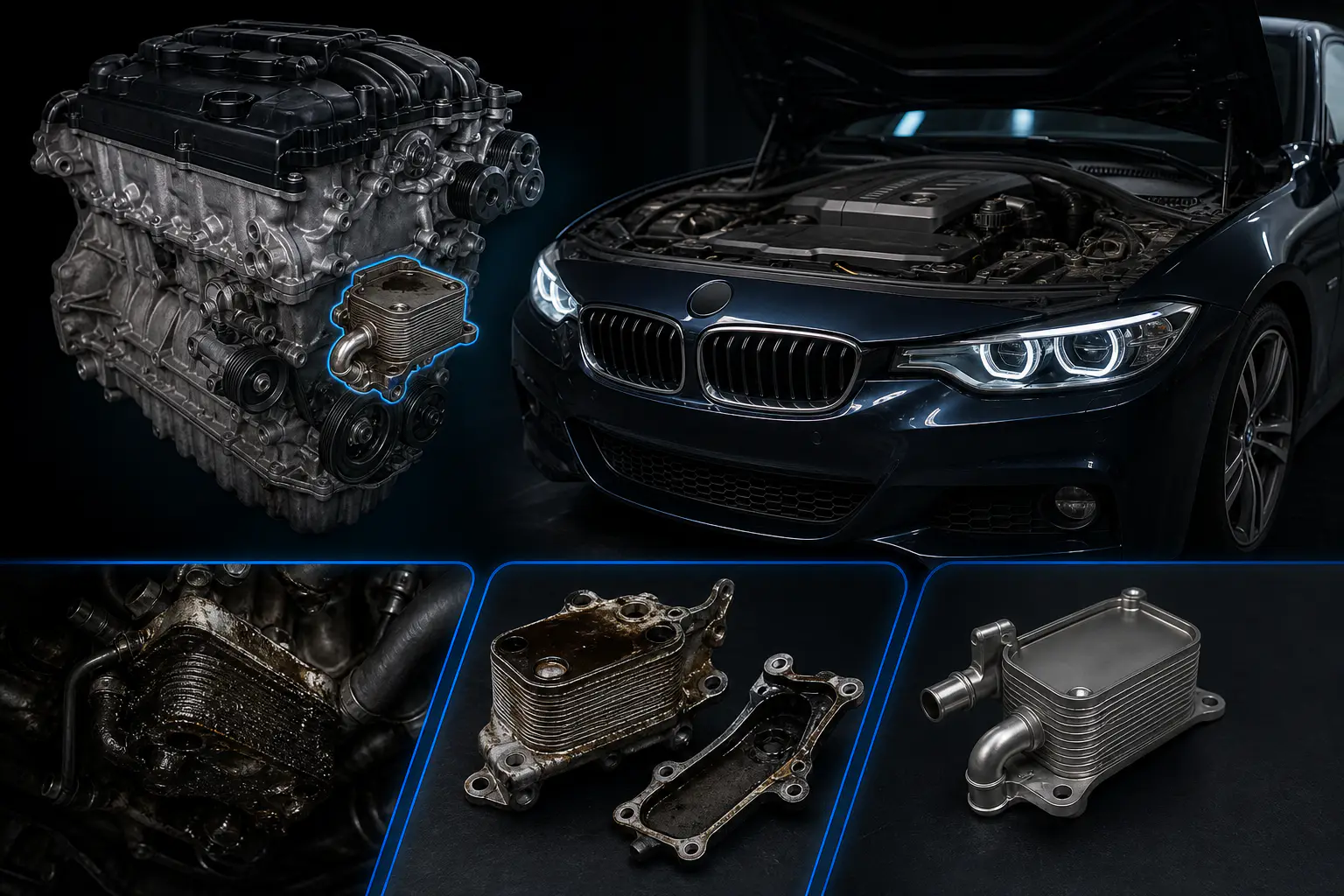
How to Replace the BMW F30 N13 Oil Cooler?
What is the BMW F30 N13 Oil Cooler and Why is it Important?
The BMW F30 N13 engine is a turbocharged engine, and maintaining the engine oil temperature at an ideal level is critical for the healthy operation of the engine. The oil cooler helps regulate the engine oil temperature and prevents the engine parts from overheating.
Function of the Oil Cooler
Oil coolers prevent the engine oil from overheating by lowering its temperature. An engine operating at an ideal temperature experiences less wear and operates more efficiently.
Recommended Inspection Interval
The recommended inspection interval for the oil cooler in the BMW F30 is every 50,000 km or during annual maintenance.
When is it Necessary to Replace the BMW F30 N13 Oil Cooler?
When it's time to replace the oil cooler, some typical failure symptoms may appear. Detecting these symptoms early can help prevent larger engine issues.
Typical Failure Symptoms
- Engine overheating
- Coolant mixing with oil
- Drop in engine oil pressure
- Oil leaks in the cooler
If you notice any of these symptoms, it is important to have your oil cooler checked and replaced if necessary.
Necessary Materials for Oil Cooler Replacement
You will need some basic tools and materials to replace the oil cooler. Having these materials on hand will make the process easier.
Required Tools and Parts
- New oil cooler (OEM or aftermarket can be preferred)
- Wrench set
- Oil filter removal tool
- Coolant
- Engine oil
Step by Step BMW F30 N13 Oil Cooler Replacement
Replacing the oil cooler is a process that needs to be done carefully. Here’s how to do it step by step:
Step 1: Preparing the Vehicle
Park the vehicle on a flat surface and wait for the engine to cool down. This way, you avoid hazards that may arise from the temperature of the fluids.
Step 2: Removing the Old Oil Cooler
Open the engine cover and remove the necessary parts to access the oil cooler. Carefully detach the oil filter and coolant lines.
Step 3: Installing the New Oil Cooler
Place the new oil cooler in position and connect all fittings correctly. Refill the coolant and engine oil.
OEM vs Aftermarket Oil Coolers: Which Should You Choose?
When replacing the oil cooler, you may need to choose between OEM and aftermarket parts. Both options have their advantages and disadvantages.
OEM Oil Coolers
OEM parts are original parts approved by your vehicle's manufacturer and are generally more durable and reliable.
Aftermarket Oil Coolers
Aftermarket parts can be more economical, but care should be taken regarding quality and fit. Aftermarket parts selected from reputable manufacturers can be as reliable as OEM parts.
Post-Replacement Checks for BMW F30 N13 Oil Cooler
It is important to perform some checks after the replacement process. These checks confirm that the process was done correctly and that the vehicle operates smoothly.
Starting the Engine and Checking
Start the engine and check the oil pressure. Observe for any leaks.
Test Drive
Take a short test drive to observe any changes in engine temperature and performance.
In conclusion, replacing the BMW F30 N13 oil cooler is a critical maintenance procedure to ensure your vehicle operates efficiently and lasts longer. If you do not want to neglect your vehicle's maintenance, you can check out our BMW F30 oil cooler products.