
What is a Lambda Sensor? Its Function, Failure Symptoms, and Replacement Interval
May 20, 2026 — APD Uzman Ekibi
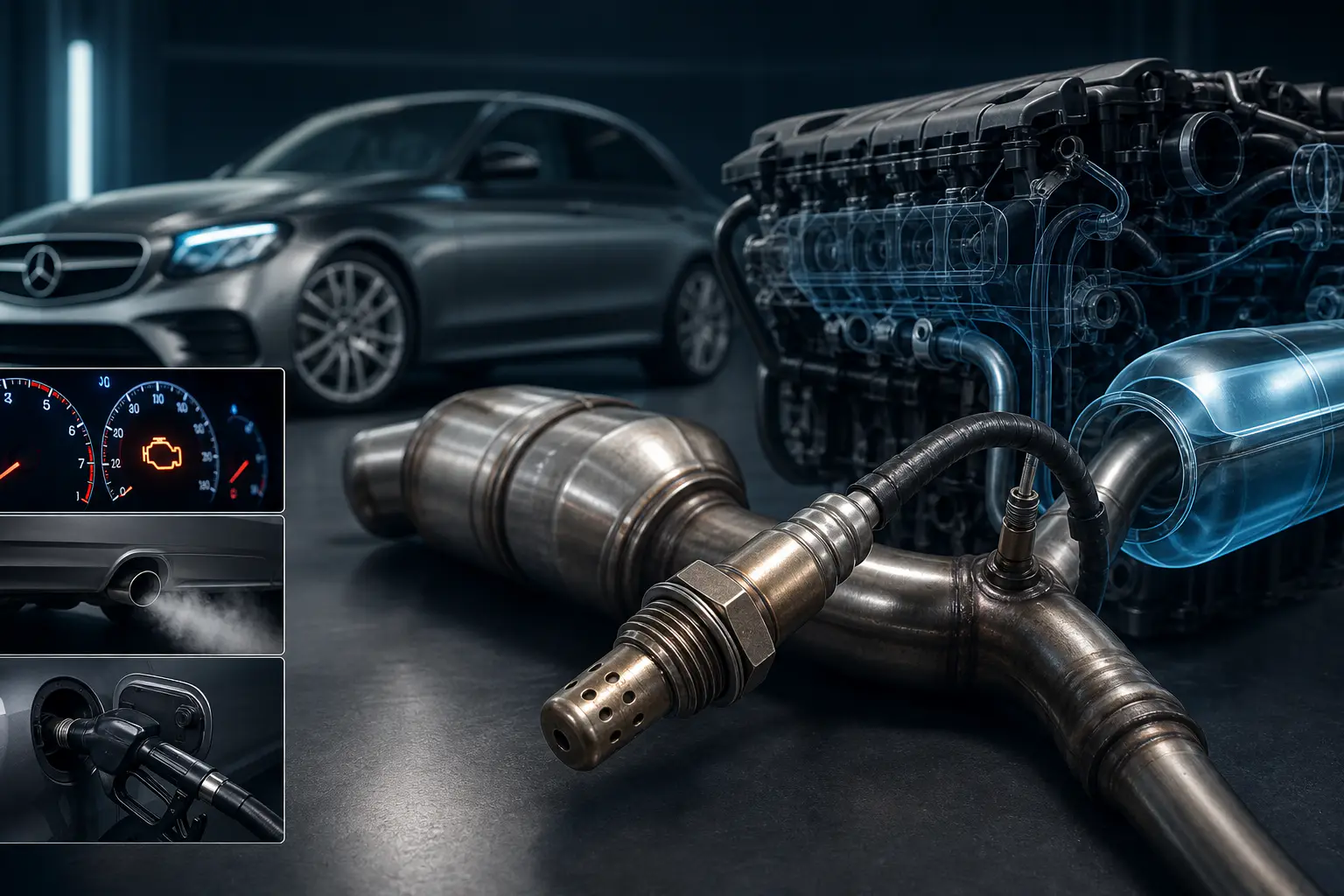
What is a Lambda Sensor? Its Function, Failure Symptoms, and Replacement Period
Automotive technology is continuously evolving to enhance vehicle performance and fuel efficiency. In this context, the lambda sensor plays a critical role in the emission systems of modern vehicles. Commonly used in German automotive brands like BMW and Mercedes, this sensor is vital for engine performance and environmentally friendly driving. In this article, we will provide detailed information about what a lambda sensor is, its functions, failure symptoms, and replacement period.
What is a Lambda Sensor?
A lambda sensor is a device that measures the air-fuel mixture of the engine. This sensor determines the amount of air and fuel entering the engine's combustion chamber, thereby increasing the efficiency of the combustion process. Commonly found in vehicles such as BMW E46 and Mercedes W204, this sensor is typically installed in the exhaust system.
How the Lambda Sensor Works
The lambda sensor measures the oxygen level in the exhaust gases and sends information to the engine control unit (ECU). This information is used to optimize the engine's air-fuel mixture. If the air-fuel mixture is too rich or too lean, the engine's efficiency decreases, and emissions increase. The lambda sensor continuously updates this data to prevent such situations.
Functions of the Lambda Sensor
The main functions of the lambda sensor are as follows:
- Monitoring and optimizing the air-fuel mixture.
- Increasing the combustion efficiency of the engine.
- Reducing emissions and ensuring environmentally friendly driving.
- Improving engine performance by transmitting accurate data to the engine control unit (ECU).
Different Types of Lambda Sensors
There are various types of lambda sensors available in the market. These are generally divided into two main groups:
- Single-point measurement sensors (typically found in older model vehicles).
- Dual-point measurement sensors (commonly used in modern vehicles).
Failure Symptoms of the Lambda Sensor
A malfunctioning lambda sensor can negatively affect the vehicle's performance. Below are the symptoms of failures that may occur in the lambda sensor:
- Check engine light: If the ECU detects that the sensor is not functioning correctly, it will illuminate the check engine light.
- Increased fuel consumption: A faulty lambda sensor can cause an imbalance in the air-fuel mixture, leading to increased fuel consumption.
- Loss of performance: Symptoms such as loss of traction and sluggishness may be observed in the vehicle.
- Exhaust smoke: Excessive black or white exhaust smoke may indicate that the lambda sensor is faulty.
Diagnosis and Inspection Methods
If you suspect a failure in the lambda sensor, you can follow these steps for inspection:
- Check error codes using an OBD-II scanner.
- Measure exhaust gas emissions.
- Inspect the electrical connections and wiring of the lambda sensor.
Replacement Period of the Lambda Sensor
The lifespan of a lambda sensor varies depending on the vehicle's operating conditions, maintenance schedule, and the quality of the sensor. Generally, it is recommended to replace lambda sensors between 100,000 and 160,000 kilometers. However, in some cases, the sensor may need to be replaced earlier. For example, the following conditions may lead to faster wear of the lambda sensor:
- Low fuel quality.
- Excessive engine overheating.
- Damage to the exhaust system.
Replacement Procedure
Replacing the lambda sensor should generally be performed by a qualified technician. During the replacement process, the following steps are followed:
- Access the vehicle's exhaust system.
- Remove the old lambda sensor.
- Install the new sensor and check the connections.
- Start the engine to verify that the sensor is functioning correctly.
Frequently Asked Questions (FAQ) about Lambda Sensors
How can I tell if the lambda sensor is faulty?
A lambda sensor failure can be identified by the check engine light, increased fuel consumption, loss of performance, and excessive exhaust smoke.
How long does it take to replace a lambda sensor?
Replacing a lambda sensor typically takes between 30 minutes to 1 hour, but this time may vary depending on the vehicle model and mechanical condition.
How does a faulty lambda sensor affect the engine?
A faulty lambda sensor can cause an imbalance in the engine's air-fuel mixture, leading to loss of performance and increased fuel consumption.
What is the lifespan of a lambda sensor?
The lifespan of a lambda sensor generally ranges between 100,000 and 160,000 kilometers. However, this period may be shorter depending on operating conditions.
What should I do after replacing the lambda sensor?
After replacing the lambda sensor, ensure that the engine is running and check with an OBD-II scanner. Additionally, monitor the engine's performance.
In conclusion, the lambda sensor is an important component in modern automobiles, and its proper functioning is essential for engine performance and emission control. If you are experiencing an issue with the lambda sensor in your BMW or Mercedes vehicle, it is important to seek assistance from a qualified technician. For more information and your spare part needs, you can contact us. To reach us via WhatsApp, click here.