
How to Identify Turbo Failure? Symptoms, Causes, and Solutions
May 20, 2026 — APD Uzman Ekibi
How to Identify Turbo Failure? Symptoms, Causes, and Solutions
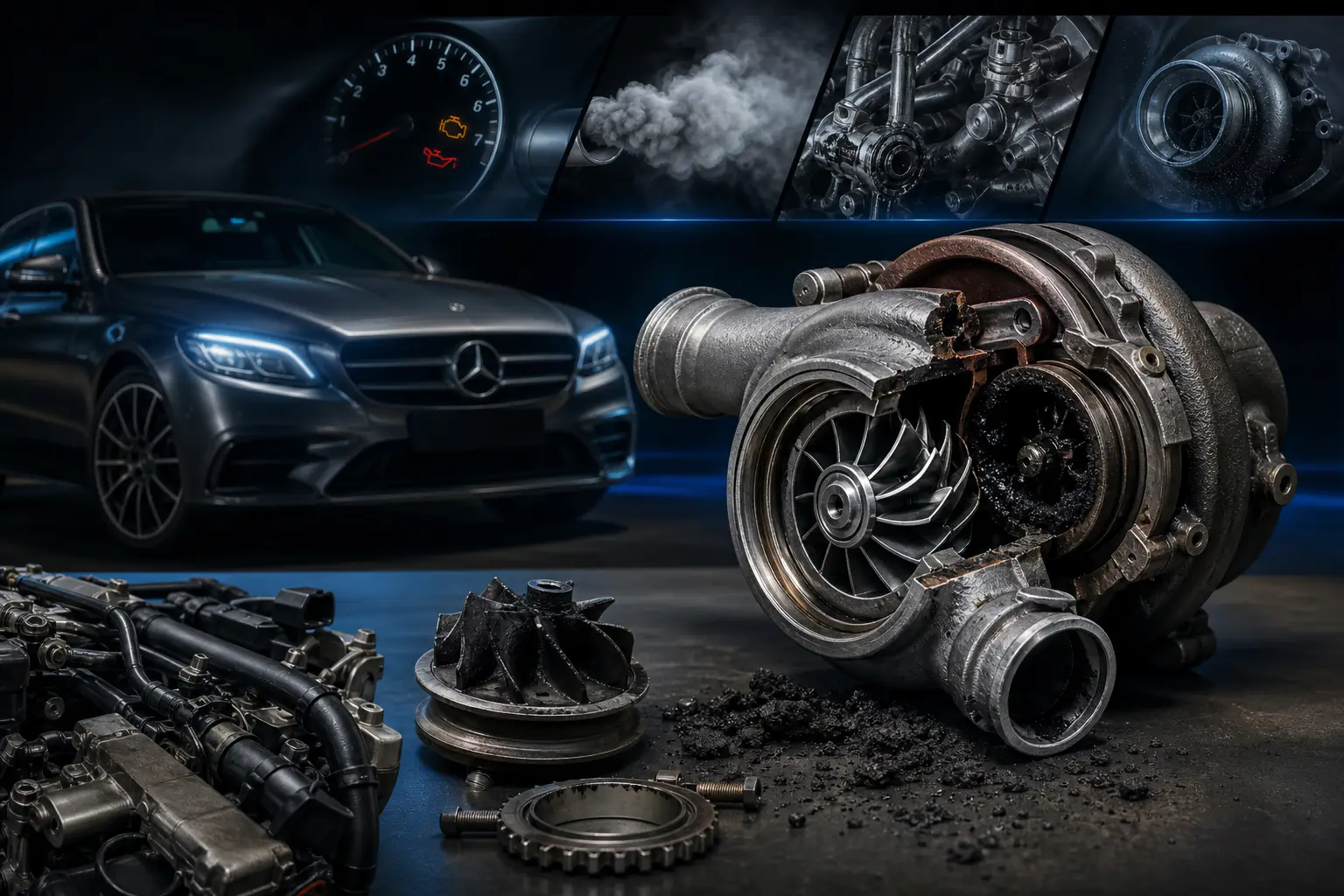
Turbo failure can be a significant issue affecting the performance of modern vehicles. Especially in high-performance vehicles like BMW and Mercedes, the healthy operation of the turbo system is of great importance. Turbo failure can lead to a loss of engine power, increased fuel consumption, and even engine damage. In this article, we will provide detailed information on how to recognize turbo failure, its symptoms, causes, and solutions.
Symptoms of Turbo Failure
Turbo failure typically manifests with specific symptoms. Timely detection of these symptoms is crucial for resolving the issue before it escalates. Below are the most common symptoms of turbo failure:
- Power Loss: If the vehicle is not accelerating as quickly as it normally does, turbo failure may be the issue.
- Check Engine Light: If the check engine light is on, it may indicate a problem with the turbo system.
- Increased Fuel Consumption: Turbo failure can cause the engine to consume more fuel.
- Noise Issues: Strange noises from the turbo system, such as whistling or hissing, may be a sign of failure.
- Exhaust Smoke: Blue or black exhaust smoke can be another indication of turbo failure.
Power Loss and Acceleration Issues
Turbo failure usually results in a decrease in engine power. For example, in the BMW E46 model, turbo failure can lead to the vehicle not performing as expected. This situation can negatively impact the driving experience and should draw the attention of vehicle owners.
Causes of Turbo Failure
There can be many different causes of turbo failure. Understanding these causes is critical for resolving the failure. Here are some common causes that can lead to turbo failure:
- Oil Deficiency: The turbo operates with engine oil. Insufficient oil can cause damage to the turbo system.
- Filter Clogging: Clogging in air or oil filters can prevent the turbo system from operating efficiently.
- Cooling Problems: Failure of the turbo cooling system can lead to overheating.
- Worn Parts: Turbo parts that wear out over time can hinder the proper functioning of the system.
- Sealing Issues: Sealing problems in the turbo system can lead to performance loss.
Oil Deficiency and Filter Clogging
Especially in Mercedes W204 and W213 models, oil deficiency is a significant factor that can lead to turbo failure. Additionally, clogging of the oil filter can disrupt the oil flow to the engine, negatively affecting the turbo system.
How to Diagnose Turbo Failure?
There are several methods to diagnose turbo failure. These methods allow you to gain more information about the condition of the vehicle:
- Visual Inspection: The turbo system and connection hoses should be visually inspected.
- Diagnostic Device Usage: Connecting to the vehicle's computer can allow for reading error codes.
- Oil Pressure Check: Checking the turbo oil pressure can help determine if there is an issue.
Visual Inspection and Diagnostic Device Usage
Visual inspection is particularly effective in diagnosing turbo failure in BMW F30 models. Cracks in the connection hoses and oil leaks can help you identify the source of the problem. Additionally, using a diagnostic device to check the error codes in the vehicle's computer is an effective way to diagnose turbo failure.
How to Repair Turbo Failure?
Once turbo failure is diagnosed, the repair process begins. Here are some steps that can be taken to repair turbo failure:
- Oil Change: If there is insufficient oil, an oil change should be performed.
- Filter Replacement: Clogged filters should be replaced with new ones.
- Turbo Refurbishment or Replacement: If there are serious failures, the turbo unit should be refurbished or replaced.
Oil Change and Turbo Refurbishment
Oil change is a critical step in preventing and repairing turbo failure. Especially in Mercedes models with the OM651 engine, oil changes should be performed at regular intervals. If the turbo has suffered serious damage, refurbishment or replacement may be necessary.
Precautions to Prevent Turbo Failure
It is possible to take some simple yet effective precautions to prevent turbo failure. These precautions can extend the life of your vehicle's turbo system:
- Regular Maintenance: Regular vehicle maintenance ensures the healthy operation of the turbo system.
- Use of Quality Oil: Using quality engine oil can help prevent turbo failure.
- Check Cooling System: It is important to check whether the turbo cooling system is functioning properly.
Regular Maintenance and Use of Quality Oil
BMW and Mercedes vehicle owners can prevent turbo failure by performing regular maintenance and using quality oil. Especially in BMW B47 engines, the quality of engine oil is of great importance. Using quality oil extends the life of the engine and turbo system.
Conclusion
Turbo failure is a common issue in modern vehicles, and its symptoms and causes should be carefully examined. Vehicle owners should perform regular maintenance and use quality parts to detect and prevent turbo failure. Remember, the healthy operation of the turbo system is critical for your vehicle's performance. For more information and your spare part needs, contact us via WhatsApp.
FAQ
1. What are the symptoms of turbo failure? Turbo failure typically manifests as power loss, increased fuel consumption, check engine light, noise issues, and exhaust smoke.
2. What are the causes of turbo failure? Causes of turbo failure can include oil deficiency, filter clogging, cooling problems, worn parts, and sealing issues.
3. How is turbo failure diagnosed? Turbo failure can be diagnosed through visual inspection, diagnostic device usage, and oil pressure checks.
4. How is turbo failure repaired? Repairing turbo failure involves oil changes, filter replacements, and turbo refurbishment or replacement.
5. What should I do to prevent turbo failure? To prevent turbo failure, it is important to perform regular maintenance, use quality oil, and check the cooling system.