
BMW's Move to Lock the Hood: Will a Screwdriver No Longer Be Useful?
14 April 2026
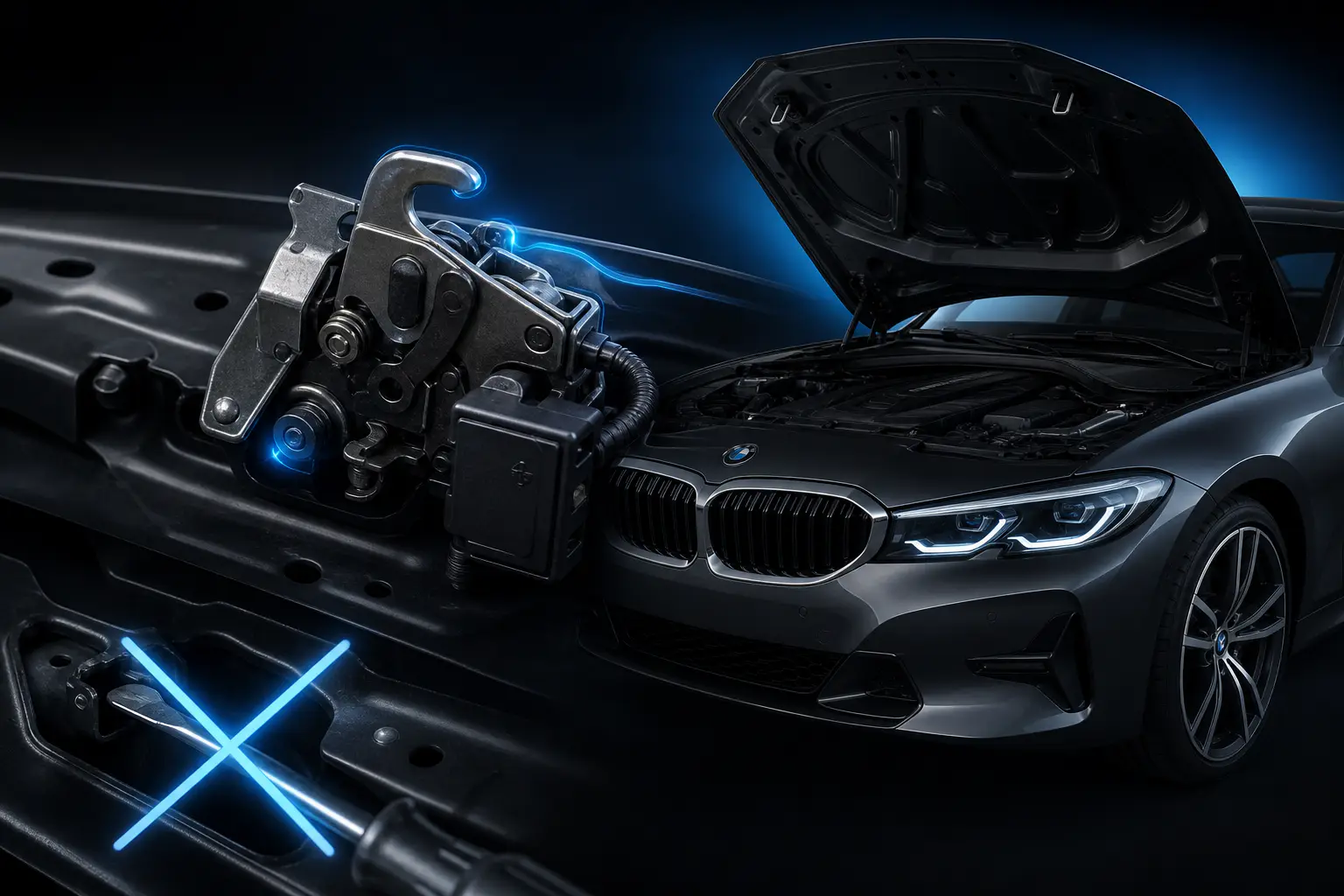
What is BMW's New Logo Bolt Patent? Is the Right to Repair Ending?
The automotive world is shaken not only by engine power and aerodynamic designs but also by small yet impactful strategic moves. The most talked-about technology and automotive news of recent days is undoubtedly BMW's new patented bolt design.
The German automotive giant has patented a new fastener that uses its iconic "Roundel" logo as the bolt head. At first glance, it may seem like an aesthetic touch, but this move could lead to a reshuffling of the cards in the automotive repair and maintenance sector. So why?
 (Detailed and modern appearance of the security bolt patented by BMW)
What is the BMW Logo Bolt Patent?
According to this quietly acquired patent by BMW, the bolts to be used in certain areas of vehicles do not have a standard flat or star screwdriver slot on the head. Instead, the bolt head is designed as a four-part circle, just like the BMW logo.
 (Technical details of the bolt head in official patent drawings)
- Special Design: Two opposite segments of the circle are recessed, while the other two segments are flush.
- Security: This asymmetric and unique structure makes it impossible for a standard key or screwdriver to grip the bolt.
- Purpose: To remove or tighten the bolt, a special adapter with the negative mold of the logo, which will only be available at authorized services, is required.
Why Was Such a Design Made?
From BMW's perspective, the main argument is "Security". The company does not want unauthorized and unknowledgeable individuals to interfere with critical connection points of vehicles (such as seat rails, engine connections, chassis parts). A bolt that is tightened or left loose with incorrect torque can jeopardize driving safety.
However, car enthusiasts and industry analysts believe that there is also a commercial motivation behind this move.
"Right to Repair" Debate
This patent seems to contradict the principle of "Right to Repair", which is on the agenda of consumer rights advocates worldwide. Here are some possible scenarios:
- Independent Services Will Be Challenged: Your mechanic or independent BMW services may not be able to intervene in the vehicle even for a simple part replacement if they do not have this special adapter.
- Cost Increase: Vehicle owners may have to go to authorized services even for the slightest operation. This means an increase in maintenance costs.
- Eco-System Lock: Similar to what Apple has done in the tech world, BMW may aim to create a closed system at the hardware level, making users dependent on the brand.
Frequently Asked Questions (FAQ)
No, this is a newly acquired patent. These bolts are not yet widely used in existing BMW models on the roads (G20, G30, etc.). They are likely to appear in future models (for example, the Neue Klasse series).
Theoretically, they cannot be removed without the original adapter. However, skilled mechanics or aftermarket manufacturers may eventually produce compatible aftermarket tools for these bolts. Still, this could carry risks such as "voiding the warranty".
They are classified as "tamper-proof" because they provide protection against theft and physically prevent unauthorized individuals from interfering with critical components such as the engine or chassis.
Conclusion
BMW's logo bolt move may herald the beginning of a "closed box" era in the automotive industry. While it aims to maintain security and quality, it seems likely to continue to be debated for restricting users' control over their vehicles.
What do you think about this? Should having your vehicle's maintenance done only at authorized services be a necessity? Don't forget to share your thoughts in the comments!