
BMW F30 Coolant Loss Issue: Thermostat Water Flange Failure and Solution
April 14, 2026
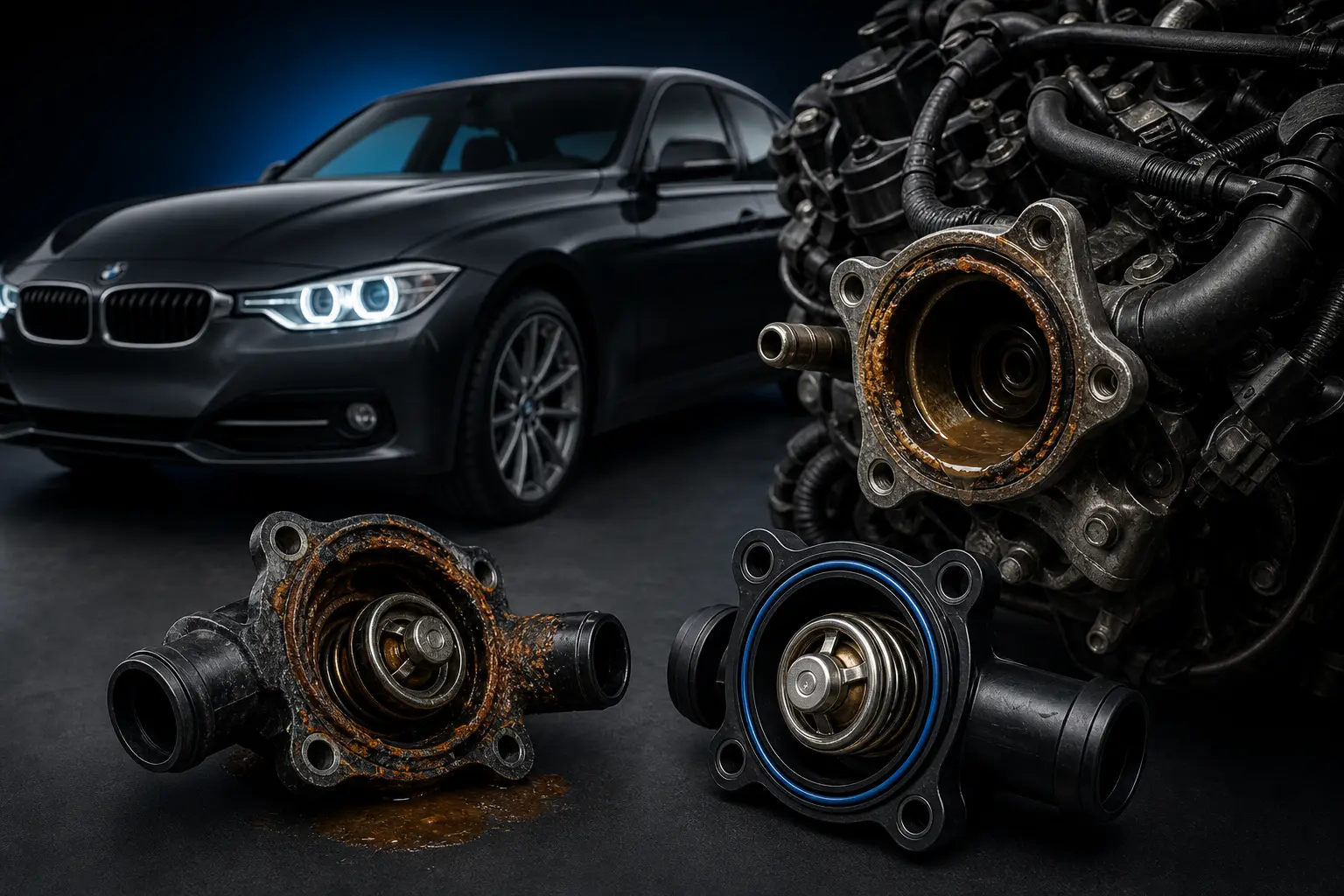
BMW F30 Thermostat Water Flange Failure: Why Does It Lose Water and What Is the Solution?
One of the most common chronic problems experienced by BMW enthusiasts, especially in the F30 chassis code 3 series (3.16i and 3.20i EfficientDynamics) models, is cooling system failures. If you frequently receive the "Coolant level low" warning on your vehicle's trip computer or see blue/green fluid puddles under your vehicle, the source of the problem is most likely the Thermostat Water Flange (Thermostat Housing) part.
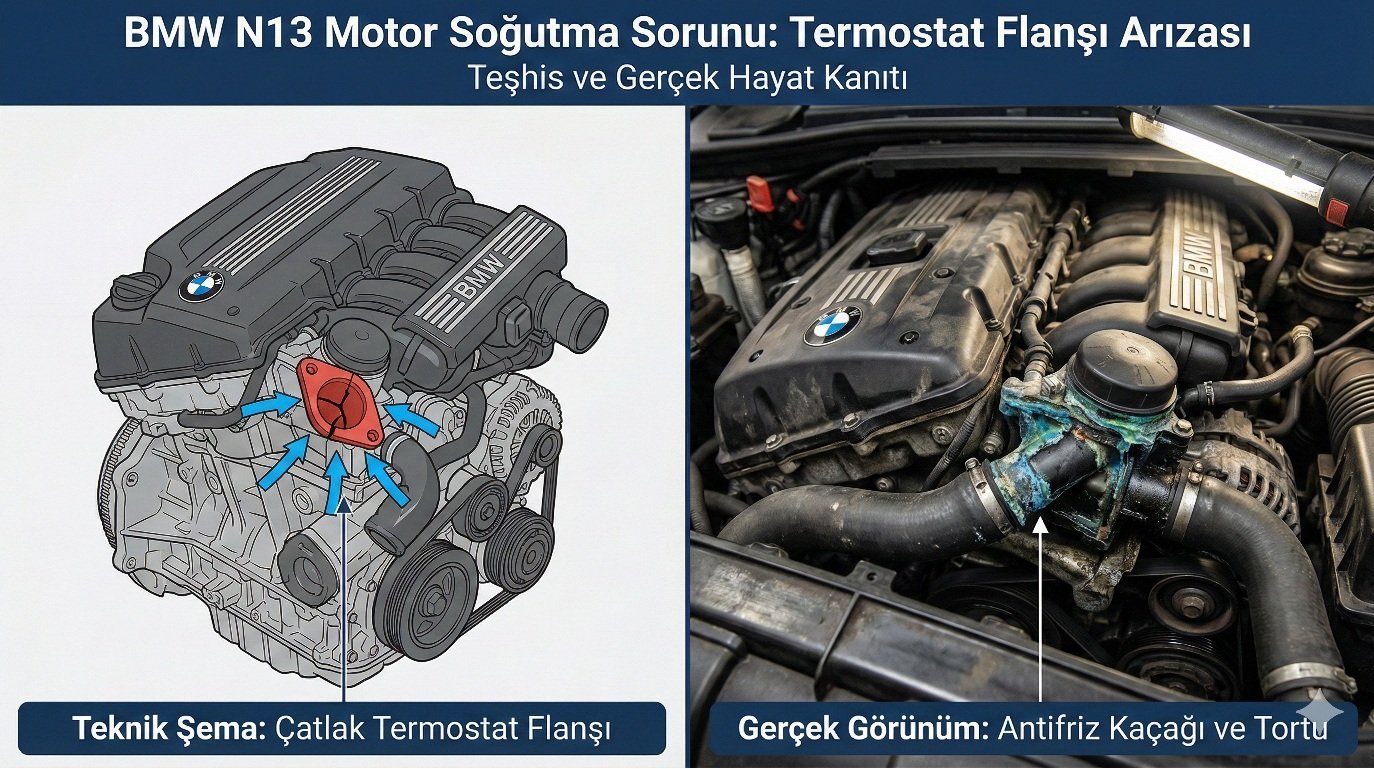
*Image: Location of the thermostat flange on the BMW F30 N13 engine and typical leak points.
In this detailed guide, we will examine the causes, symptoms, replacement process, and important considerations when selecting parts for water flange failures in vehicles with the N13 engine.
Why Does the Thermostat Water Flange (Housing) Crack?
The BMW N13 engine is designed with a focus on efficiency and performance, operating at higher temperatures (approximately 105°C - 108°C thermostat opening temperature) compared to other atmospheric engines. While this high heat increases the engine's efficiency, it gradually exerts a tiring effect on plastic components over time.
The original water flange is made of hard plastic (composite) material. After years of heating-cooling cycles, this plastic material "cooks" and loses its flexibility, becoming rigid (baked). As a result:
- It breaks at the hose inlet-outlet ports.
- It deforms from the gasket surface where it connects to the engine block.
- Capillary cracks form, leaking antifreeze under pressure.
How Do I Recognize the Failure? (Symptoms)
The thermostat water flange failure usually starts insidiously and increases over time. Monitoring the following symptoms can prevent you from being stranded:
- Continuous Water Loss: If you have to add water to the expansion tank weekly or monthly, there is a leak in the system.
- Burnt Sugar Smell: If you smell a sweet burnt odor when you open the hood or turn on the heater, this is the smell of antifreeze dripping onto the engine block and evaporating.
- Visible Wetness: If you see wetness or dried white/blue residues at the front of the engine, under the intake manifold.
- Fluctuation in Temperature Gauge: When the system loses water, it can create air pockets, causing the temperature gauge to rise and fall momentarily.
After Replacement: Bleeding the Cooling System
After replacing the thermostat water flange, the most critical step is adding new antifreeze to the system and bleeding the system. Since BMW F30 vehicles have an electric water pump, this process is performed automatically:
For skilled mechanics or knowledgeable users, the procedure is as follows:
- The ignition is on (Engine not running), and the headlights are turned on.
- The climate control temperature is set to maximum, and the fan speed is set to minimum.
- The accelerator pedal is pressed for about 10-15 seconds (Kick-down).
- The system switches to automatic bleeding mode, which takes about 10-12 minutes. During this time, the sound of the electric pump can be heard.
Frequently Asked Questions (FAQ)
Don't Risk Your Vehicle, Use Guaranteed Parts!
Check out our Thermostat Water Flange product, specially sourced for your BMW F30, made from high heat-resistant materials, with complete gaskets included. Enjoy same-day shipping from stock!
See BMW F30 Water Flange Price and Buy ➤